
Types of Dental Bites: Overbite, Underbite, Crossbite & More
Your bite, also called your occlusion, describes how your upper and lower teeth come together. Some bite and tooth-alignment variations are minor and do not require treatment, while others may affect chewing, tooth wear, comfort or oral health.
What Does a Normal Bite Look Like?
In a typical bite, the upper front teeth overlap the lower front teeth slightly, and the points of the back teeth fit into the grooves of opposing teeth. MedlinePlus describes this normal relationship and explains that many minor alignment variations do not need treatment. A small overlap is therefore not automatically a problem. A photograph or mirror check alone cannot determine whether your bite needs correction.
Overbite and overjet describe different directions. Overbite refers to vertical overlap; overjet refers to how far the upper front teeth project horizontally ahead of the lower teeth. These terms are explained in the American Association of Orthodontists glossary. A person may have more than one alignment concern, so the label alone does not tell you which treatment is appropriate.
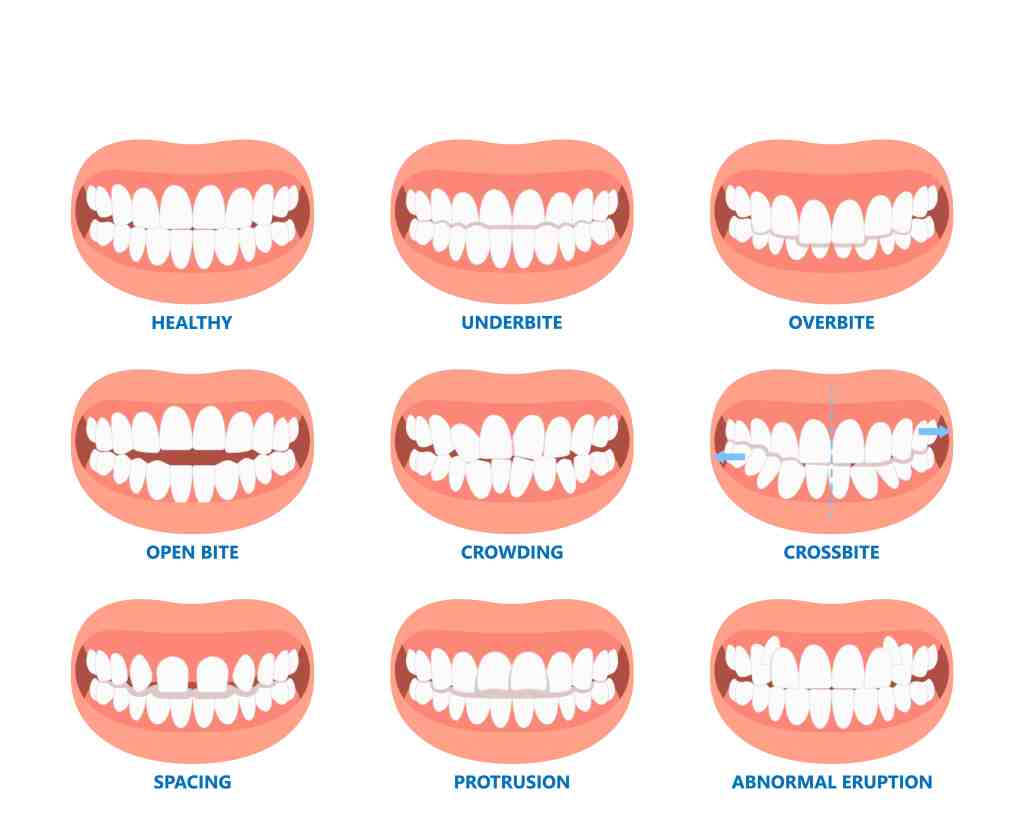
Common bite and alignment patterns include:
- Overbite: The upper front teeth vertically overlap the lower front teeth. Some overlap is normal, but a deeper overlap may sometimes require evaluation.
- Underbite: The lower front teeth sit in front of the upper front teeth when the mouth is closed.
- Crossbite: One or more upper teeth sit inside the lower teeth rather than outside them when the teeth come together.
- Open bite: Some upper and lower teeth do not meet when the mouth is closed.
- Deep bite: The upper front teeth excessively cover the lower front teeth.
- Crowding: There is not enough room for the teeth to align normally, which may cause overlapping, rotation or displacement.
- Spacing: There are noticeable spaces or gaps between teeth. Spacing may have several possible causes.
Not every bite variation needs treatment. Whether treatment should be considered depends on factors such as severity, tooth position, jaw relationship, age, growth, oral health and whether the bite is causing functional or dental problems.
How Are Bite Problems Treated?
Treatment depends on the type of bite problem, its severity, the patient’s age and growth, and the condition of the teeth and jaws. After an examination, possible approaches may include:
- Braces: Traditional orthodontic treatment can move teeth into planned positions and may be appropriate for many types of bite and alignment problems.
- Clear aligners: Clear aligner systems such as Invisalign may be appropriate for selected alignment and bite concerns. Learn more about Invisalign in Sugar Land.
- Early or growth-related treatment: For some growing children, early evaluation may identify developing bite or oral-habit concerns that can be monitored or treated differently from adult orthodontic problems. Learn more about Myobrace treatment.
- Tooth removal: In selected cases, extraction may be considered when space, tooth position or another dental condition affects the treatment plan. Extraction is not necessary for every bite problem.
- Jaw surgery: Some significant jaw-related bite problems may require evaluation by an orthodontist and oral and maxillofacial surgeon.
- Retainers: After orthodontic tooth movement, retainers may be prescribed to help maintain the corrected tooth positions.
Dr. Sneha Xavier can evaluate your teeth and bite and discuss whether monitoring, clear aligners, another dental treatment or referral to an orthodontist may be appropriate for your situation.
If you are concerned about your bite or tooth alignment, contact Texan Smile to schedule an evaluation.
How Long Does Treatment for a Bite Problem Take?
The length of treatment varies considerably. It depends on the type and severity of the bite problem, the treatment being used, the patient’s age and growth, how the teeth respond to treatment and how consistently treatment instructions are followed.
Some relatively minor tooth-alignment concerns may require a shorter course of treatment, while more complex bite or jaw problems can require a longer treatment plan. Because every case is different, a dental or orthodontic evaluation is needed before an accurate timeline can be estimated.
For patients using braces or clear aligners, follow-up visits are important so tooth movement and bite changes can be monitored. Retainers may also be recommended after active orthodontic treatment to help maintain the new tooth positions.
If you are considering clear aligners, visit our Invisalign in Sugar Land page. For questions about a child’s developing bite or oral habits, you can also learn about Myobrace treatment.
Questions to Bring to a Bite Evaluation
Before your visit, write down what prompted your concern: the appearance of your teeth, a change in how they meet, difficulty chewing, or a question raised at a previous appointment. Bring information about previous orthodontic treatment and any retainers or appliances you use. This helps you explain your goals without trying to diagnose the problem yourself.
Ask which findings are primarily cosmetic and which affect function or dental health. You can also ask whether observation is reasonable, what records are needed before recommending treatment, and whether a specialist assessment would help. If treatment is proposed, request an explanation of the alternatives, expected appointments, home-care responsibilities, retention plan and individualized costs.
Clear aligners are not automatically the best option for every bite pattern. A useful consultation should connect the proposed treatment to your actual examination findings rather than choosing an appliance from a photograph or a label such as “overbite.”
Medical disclaimer: This article provides general educational information and is not a diagnosis or a substitute for an examination, individualized dental advice or treatment. Bite assessment and treatment suitability vary by patient. Consult a licensed dentist or orthodontist about your symptoms and options.