
Dental Implants
If you are missing one or more teeth, dental implants in Sugar Land may be one option for restoring your smile and replacing missing teeth.
At Texan Smile Family & Cosmetic Dentistry, Dr. Sneha Xavier can evaluate your dental health, discuss your tooth-replacement goals and explain whether implant treatment may be appropriate for you.
Dental implants can support replacement teeth while helping restore function and appearance. The right treatment depends on factors such as the number of missing teeth, the condition of your gums and bone, your overall dental health and your individual treatment needs.

What Is a Dental Implant?
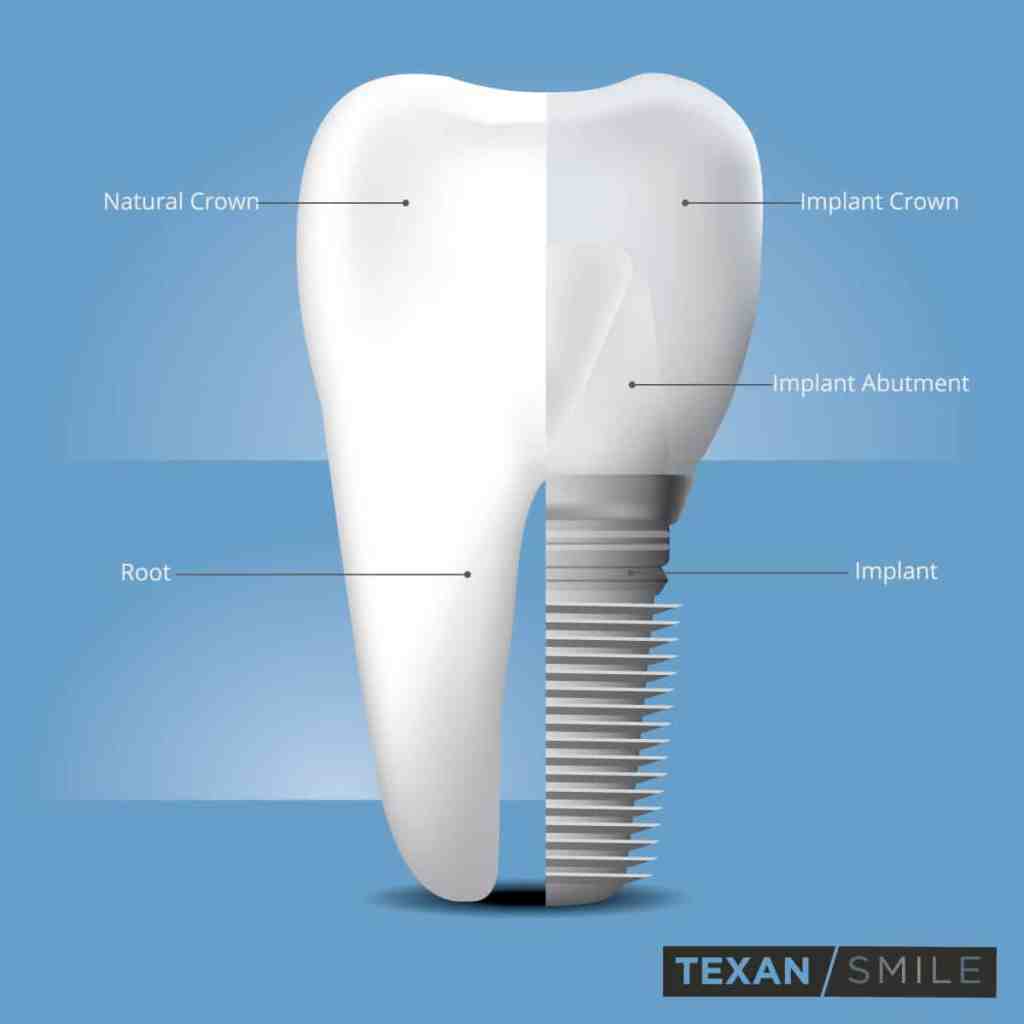
A dental implant is a small post placed in the jawbone to support a replacement tooth. After the implant has healed and become stable, a connector and dental restoration can be used to replace the visible portion of the missing tooth.
Dental implants are one of several ways to replace missing teeth. Depending on your situation, alternatives may include a dental bridge or removable tooth-replacement option.
The best choice depends on the location and number of missing teeth, the health of the surrounding teeth and gums, available bone support and your personal treatment goals.
Why Do Patients Consider Dental Implants?
Dental implants may be considered because they provide a fixed foundation for replacing missing teeth and do not rely on a removable appliance.
- Replace one or more missing teeth
- Support a replacement tooth designed to blend with surrounding teeth
- Restore chewing function affected by missing teeth
- Avoid using neighboring teeth as support in some treatment situations
- Provide a stable foundation for certain tooth-replacement restorations
No treatment is right for every patient, so the potential benefits should be considered together with the treatment process, risks, maintenance and cost.
Are You a Candidate for Dental Implants?
Implant treatment begins with evaluating whether your mouth is healthy enough to support the planned restoration.
Important considerations may include:
- The health of your gums
- The amount and condition of available jawbone
- The number and location of missing teeth
- Your bite and remaining teeth
- Existing dental conditions that may need treatment first
- Health or lifestyle factors that may affect healing
Some patients may need additional dental treatment before moving forward with an implant. The appropriate sequence depends on the findings during your examination and treatment planning.
What Can Dental Implants Replace?
Implant-based treatment can be planned differently depending on how many teeth are missing.
One Missing Tooth
A single implant may be used to support a replacement tooth when one tooth is missing and implant treatment is appropriate.
Several Missing Teeth
When several teeth are missing, the treatment plan may involve more than one implant or another type of tooth-replacement restoration, depending on the location of the missing teeth and the condition of the mouth.
Multiple or Extensive Missing Teeth
Patients missing many teeth may have several restorative options. The number of implants and the type of final restoration depend on individual anatomy and treatment needs.
What Is the Dental Implant Process?
Dental implant treatment usually takes place in stages. The exact sequence varies depending on your individual case.
- Consultation and examination: Your teeth, gums, missing-tooth area and overall dental health are evaluated. Dental X-rays or other imaging may be used when needed.
- Treatment planning: The treatment plan considers the number of missing teeth, available bone, the final restoration and whether other dental treatment is needed first.
- Implant placement: If implant treatment is appropriate, the implant post is placed into the jawbone as part of the surgical phase of treatment.
- Healing: Time is allowed for the area to heal and for the implant to become stable within the bone.
- Restorative phase: After appropriate healing, the connector and final replacement tooth or restoration can be planned and placed.
- Follow-up care: The implant, surrounding gums and restoration need ongoing hygiene and regular dental evaluation.
The timeline and exact steps vary by patient. Dr. Xavier can explain how your specific treatment plan is expected to proceed after evaluating your dental needs.
How Long Does Dental Implant Treatment Take?
Dental implant treatment generally requires healing time between stages, so the process can take several months rather than being completed in a single appointment.
The overall timeline depends on the health of the treatment area, the number of implants involved, healing progress and whether other treatment is needed before or during the implant process.
Your treatment plan should include an explanation of the expected sequence and timing for your individual case.
Dental Implants vs. Bridges and Dentures
Dental implants are not the only option for replacing missing teeth. The right treatment depends on your dental health, the location and number of missing teeth, treatment goals and budget.
Dental Implants
Implant treatment uses a post in the jawbone to support a replacement tooth or restoration.
Dental Bridges
A traditional bridge replaces a missing tooth by using neighboring teeth as support. Learn more about dental bridges in Sugar Land.
Removable Tooth-Replacement Options
Removable options may also be appropriate for some patients, particularly when several or many teeth need to be replaced.
Dr. Xavier can help you compare the advantages, limitations, maintenance needs and costs of the options that apply to your situation.
What Is the Difference Between an Implant and an Implant Crown?
The dental implant is the part positioned in the jawbone. The visible replacement tooth is a separate restoration attached to the implant system.
The final restoration is designed based on the location of the missing tooth, your bite and your surrounding teeth. Like other dental restorations, the visible crown or restoration may eventually require maintenance or replacement even when the implant itself remains stable.
You can learn more about tooth restorations on our dental crowns page.
Are Dental Implants Safe?
Dental implants have been used for many years as a method of replacing missing teeth, but implant placement is still a surgical dental procedure and involves potential risks.
Possible complications can include:
- Infection around the treatment area
- Damage to nearby teeth or structures
- Nerve-related complications
- Problems with healing
- Failure of the implant to become or remain stable
- Pain, swelling or other postoperative concerns
Your individual risks depend on your health, anatomy and treatment plan. These should be discussed before beginning implant treatment.
How Do You Care for Dental Implants?
Implants still require daily care. The gums and tissues around an implant need to remain healthy, and plaque buildup around an implant can create problems just as it can around natural teeth.
- Brush thoroughly every day.
- Clean around and between the implant restoration as instructed.
- Keep routine dental examinations and professional cleanings.
- Tell your dentist if the implant area becomes painful, swollen or feels loose.
- Ask about protection if you grind or clench your teeth.
How Much Do Dental Implants Cost in Sugar Land?
The cost of dental implant treatment varies because the treatment plan is different for every patient.
Factors that can affect the overall cost include:
- The number of missing teeth being replaced
- The number of implants included in the treatment plan
- The type of final restoration
- Diagnostic imaging or other treatment-planning needs
- Any dental treatment needed before implant treatment
- The complexity of the individual case
After an evaluation and treatment plan, the Texan Smile team can provide a more meaningful estimate based on your specific needs.
Dental insurance coverage varies by plan. You can also ask our team about available dental payment and financing options.
Dental Implant Consultations at Texan Smile
Choosing how to replace a missing tooth is an important decision. Dr. Sneha Xavier can evaluate your dental condition, discuss your goals and help you understand the treatment options that apply to your situation.
During your consultation, you can discuss:
- Whether implant treatment may be appropriate
- The condition of your teeth, gums and treatment area
- Possible alternatives such as bridges or removable options
- The expected treatment sequence and timeline
- Cost and financing considerations
Learn more about Dr. Sneha Xavier and Texan Smile.

Frequently Asked Questions About Dental Implants
Candidacy depends on factors such as the health of your gums, available bone, the condition of the remaining teeth and your overall treatment needs. A dental examination and imaging may be needed before determining whether implant treatment is appropriate.
Implant treatment usually occurs in stages and commonly requires healing time between those stages. The total timeline varies based on the treatment plan, healing and whether other dental treatment is needed.
Dental implants are intended as a long-term tooth-replacement option, but no dental treatment can be guaranteed to last forever. The implant, surrounding tissues and final restoration require regular care and evaluation, and the restoration may eventually need repair or replacement.
Neither option is best for every patient. Implant treatment and dental bridges replace missing teeth in different ways. The condition of the neighboring teeth, available bone, location of the missing tooth, cost and individual treatment goals can all affect the decision.
The cost varies based on the number of missing teeth, number of implants, type of restoration, diagnostic needs and complexity of the treatment plan. A personalized estimate can be provided after evaluation and treatment planning.
Schedule a Dental Implant Consultation in Sugar Land
If you are missing a tooth or considering your tooth-replacement options, schedule a consultation at Texan Smile Family & Cosmetic Dentistry. Dr. Xavier can evaluate your dental needs and help you understand whether implant treatment or another option may be appropriate.
Texan Smile Family & Cosmetic Dentistry
4821 LJ Parkway, Suite 30
Sugar Land, TX 77479
Call 832-271-8280
Reviewed by Dr. Sneha Xavier, DMD – Family & Cosmetic Dentist in Sugar Land, TX.
Medical Disclaimer: The information provided on this page is for educational purposes only and is not intended as medical or dental advice. Dental implant candidacy, treatment recommendations, risks and expected outcomes vary by patient and require an individual examination and treatment plan.